
Go Forth 2026
Access your Middle School or K-5 Educator’s Guide for your classroom by filling out the form below. You will then be directed to a page where you can download a high quality PDF file to print out or share digitally.
Download the:
Go Forth 2026
Objective

In this edition, students will PRAY with the theme of hope, ENCOUNTER a story of quiet hope from a small parish in Bolivia, and EXPLORE what the Church has to say about hope.
Then, students will APPLY what they have learned by taking action in their local communities and in the world.
Step 1: Pray
Leader: Today, we’re praying for hope. Hope isn't just wishful thinking; it’s the spark we feel when we know something good is coming because we trust in God. Let’s ask God to help us keep that spark alive. Jesus, be with us as we wait. Whether we are waiting for something huge or just a small win in our day, help us trust your timing.
All: My hope comes from God. (Ps. 62:6)
Leader: Jesus, when we feel restless or annoyed with waiting, show us how to be patient and keep our cool.
All: My hope comes from God.
Leader: Help us feel brave and confident. When life feels like a storm, remind us that Your love is an anchor that never moves.
All: My hope comes from God.
Leader: Help us look for signs of your goodness in the world today and share that hope with our friends.
All: Amen.
(Note for teachers: the Hebrew word for waiting in hope is “quvah”; the Hebrew word for waiting patiently is “yachal”; and the Greek word for confidence in hope is “elpis.)
Step 2: Personal Connections
Fresh Out of Hope.
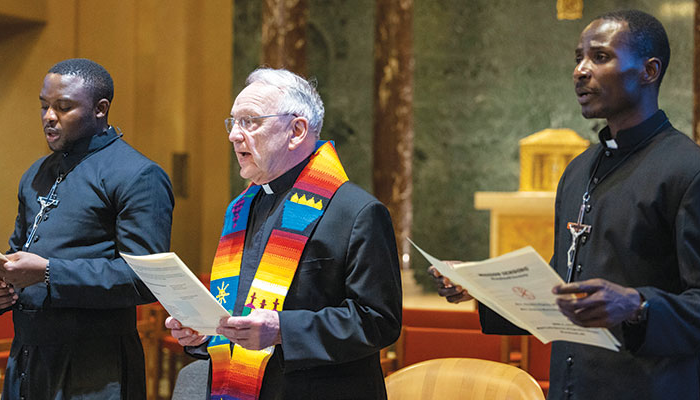
When Father Joshua Maondo and I, Father Charles, arrived in Bolivia for our first mission as newly ordained priests, it felt like we had come to a place running low on hope. Our new home was a remote parish called Chipiriri, deep in the Amazon rainforest. The jungle buzzed with life, but the parish felt quiet and tired. The church building stood strong, yet something was missing. There was no choir to sing. No lectors to read Scripture. No altar servers helping at Mass. People came on Sundays, but when asked to help, many stepped back. It felt like a place that was fresh out of hope.
But this story did not begin in Bolivia. My own journey started far away, in Migori, Kenya, when I was a child. My family helped guide my faith. My grandfather even donated land so a small chapel could be built, and my father became a catechist, teaching others about God. That was when I first began walking in faith, one step at a time. When I was only six years old, something frightening happened. Robbers attacked my father while trying to steal from our home. I saw violence up close, and it stayed with me. I could have grown angry or bitter. Instead, I began to wonder how people could live in peace.
That was when I first thought about becoming a priest. I saw priesthood as a way to unite people; I later realized. If God calls me, I should respond so I can be a sign of peace. Father Joshua’s story also began in Kenya, in Kakamega. His faith also grew at home, especially due to his grandmother's influence. When she married his grandfather, she brought the Catholic faith with her, and soon the whole family followed. After Joshua received his First Holy Communion, he became an altar server. His grandmother was incredibly proud. She ensured that her grandchildren attended catechism and discussed with them what they learned. Joshua and his grandmother often discussed how Church teachings could be lived out in African culture.
Even as a young boy, Joshua felt a strong calling to the priesthood. Later, while studying linguistics and literature at Kenyatta University, Joshua learned about the Maryknoll Fathers and Brothers. He noticed something different about them. “They moved with the people,” he said. “With care. With compassion.” That way of serving stayed with him. Years later, both of us found ourselves in Chipiriri, Bolivia, standing in a parish that felt forgotten. The parish had been founded in 1968, but when we arrived, it felt like a body without breath. There was little lay participation, and some days it seemed like the spark had gone out. So we chose not to wait.
We went out to visit families. We walked muddy paths. We crossed flooded yards. We listened to people’s stories. And slowly, we began to notice something. Hope was not gone. It was just quiet. One rainy day, we visited a family whose yard flooded so badly that a tree looked like it was floating. They walked through water and mud without boots. But when we arrived, they welcomed us with joy and offered a freshly caught fried fish. We shared the meal together, laughing at their small table.
Another day, I celebrated Mass in a small chapel. Only two elderly parishioners came. Just two. After Mass, they invited me to their home. The path there was flooded, and floating logs formed a narrow walkway. Each step was careful, but they walked without fear. This was their daily path. Their way home. Their place of rest. They were not embarrassed. They were grateful. In that moment, I understood something important. Hope does not disappear. Sometimes it grows smaller. Sometimes it hides in faithful elders. Sometimes it walks on floating logs through muddy water.
Chipiriri may look like a parish that is fresh out of hope, but hope is stubborn. It lives in families who share what little they have. It lives in elders who never stop showing up. It lives in priests shaped by faith-filled grandparents, brave parents, and a deep desire for peace. Our hope now is to help people discover that through baptism, everyone has a role. Everyone belongs. And when people begin to believe that, even the most tired parish can begin to breathe again. In the Amazon, we are finding that hope never dies; it always finds a way to break through.
Reflections Questions On Story:
- Has there been a time in your life or your family’s life when hope has gone quiet? What brought hope back again after that time?
- Who is a person you know who has come out of a tough time or situation with hope? What was it that gave them hope even after hardship?
- Through baptism, everyone belongs and has a role to play in the Church. What do you see as your role in the life of the Church, and more specifically, your parish?
STEP 3: EXPLORE SCRIPTURE AND TRADITION

Read the following Scriptures.
Old Testament: Ezekiel 34:7-16
New Testament: Romans 8:18-25
Gospel: Luke 5:1-6
Reflect on the questions:
When have you worried about not having enough, only to have things turned out okay? What do these stories teach about trusting God?
All these readings show God providing, guiding, promising, and bringing new life. Which image feels closest to your life right now: getting daily bread, being found when lost, catching a huge surprise blessing, or walking out of something hard into new life? Why?
WHAT DOES THE CHURCH SAY?
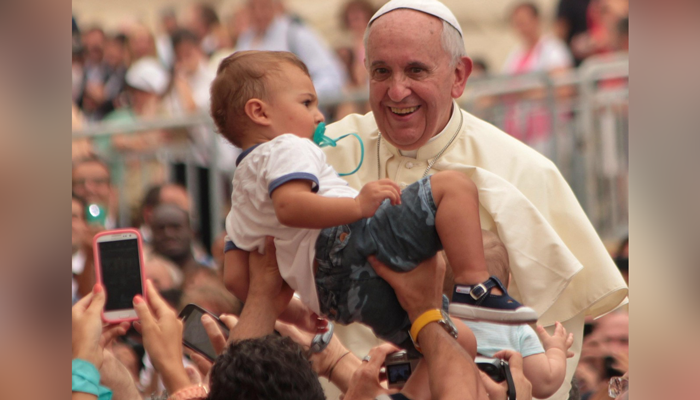
To celebrate the 2025 Jubilee Year, Pope Francis wrote a letter called Spes Non Confundit (Hope Does Not Disappoint). He explains that even when the future feels uncertain, hope lives in our hearts because of God’s love.
Here are the main points:
- Hope is a Gift: It is born from love and kept alive by the Holy Spirit. Because God never stops loving us, this hope will never let us down.
- Look for the Good: Even when the world feels scary or violent, we should look for "signs of hope"—the goodness and kindness that show God is still with us.
- Stay Anchored: Pope Francis compares hope to an anchor. Just like an anchor keeps a boat steady during a storm, trusting in Jesus helps us stay brave and secure when life gets difficult. Read Spes Non Confundit here https://maryknoll.link/RSNC
Reflect on the questions:
- Does your own definition of hope align with the vision of hope put forth by Pope Francis in this document? Do you agree that hope does not disappoint?
- While there is much negativity to overwhelm us in the world, we are not to be convinced that our world is out of hope. What in our world today gives you hope? What has been good news in your family, community, or the world lately?
- How can you make hope your anchor even when the storms of life come? What are practices, prayers, or meditations that you can incorporate into your routines to firmly root yourself in the hope of Jesus?
STEP 4: TAKE ACTION

RAISE YOUR VOICE
How will you go forth?
Who in your community needs hope right now?
Is it migrants who fear leaving their homes?
Work with local organizations to deliver groceries or run errands for them. Is it those who are unhoused during these colder months?
Provide financial or volunteer support to a non-profit that offers shelter to the homeless.
Reach out to your government leaders and advocate for improved services and support for those in need.
BE A GLOBAL NEIGHBOR
Check out these projects that the Maryknoll Fathers and Brothers are blessed to be supporting. Read through each one and, as a family, decide which one you feel called to support and learn more about.
Parish maintenance and repair Jaraguá, São Paulo, Brazil:
Support seminarians in the Diocese of Shinyanga, Tanzania:
Ministry to the elderly and infirm in Mwanza, Tanzania:
Train catechist in Tanzania:
ENGAGE YOUR FAMILY
Parishes thrive when the laity step into leadership roles. Discern together your family’s role in your parish.
- Can you participate in the hospitality ministry (being ushers, greeters, etc.)?
- Lectoring or eucharistic ministering?
- Serving coffee and donuts after mass?
- Visiting the homebound of your parish?
- Joining the social action committee?
Pick something at your home parish and get involved today. Go to the digital version of this lesson plan for more resources at discoveryourneighbor.org